Late Payments, Late Responses, Late Checkouts: The Effect of Small Delays in Rentals.
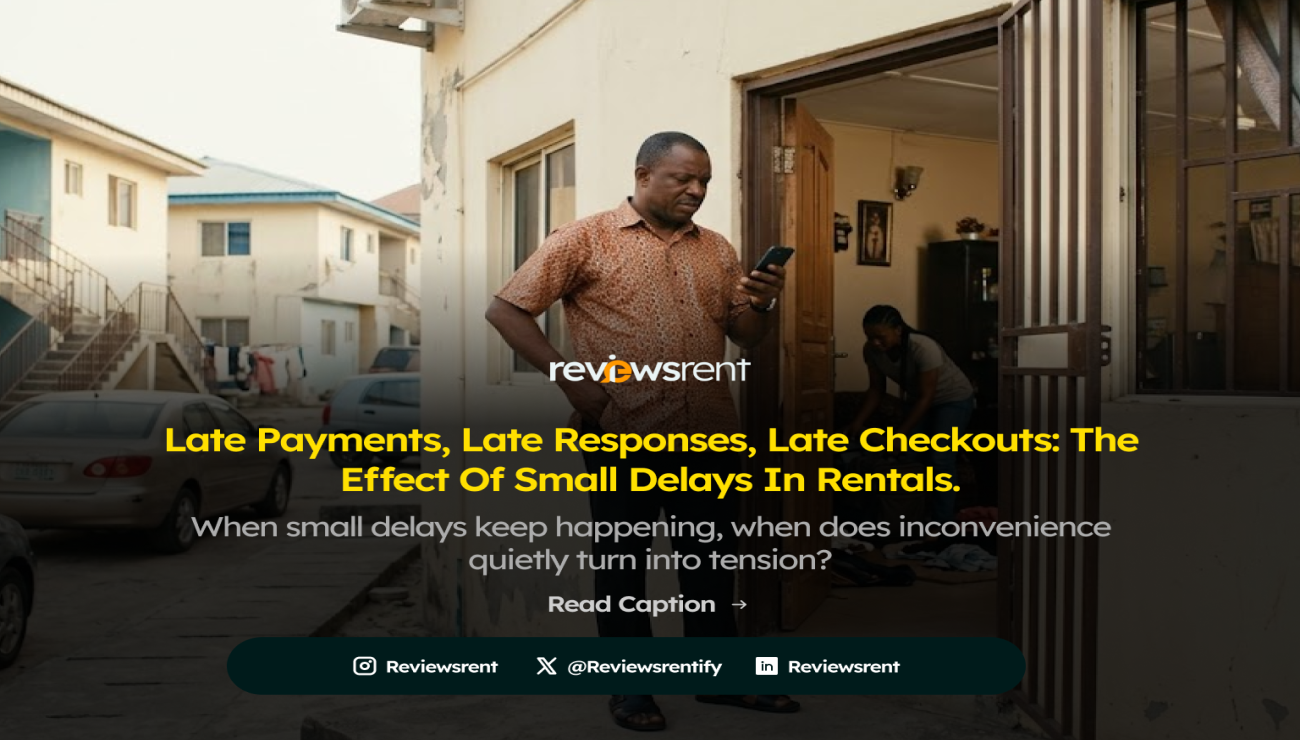
Most rental conflicts do not start with something dramatic. They usually begin with small delays that seem harmless at first.
A rent payment that comes a few days late.
A repair message that takes too long to answer.
A guest who asks for “just one more hour” after checkout time.
Individually, none of these situations feel like a big problem. But when small delays keep repeating themselves, they start affecting how people feel about the entire rental experience.
Late payments are one of the most common examples. Sometimes they happen because life simply gets complicated. Salaries get delayed. Unexpected expenses appear. But from a landlord’s perspective, rent is often tied directly to their own financial responsibilities. A few days may not sound like much, but when it happens frequently, it creates uncertainty.
On the other side, tenants often feel the same frustration when communication from landlords takes too long. A leaking tap, a faulty appliance, or a power issue may not seem urgent to the property owner, but to the person living there, it affects daily comfort.
When responses are slow, tenants may start to feel ignored, even if the landlord never intended to create that impression.
Shortlet stays also experience their own version of this. Guests sometimes ask for late checkouts because their flight is delayed or their plans change. Hosts may want to help, but if another guest is arriving soon, even a small delay can affect cleaning schedules, check-ins, and the next booking.
This is how small delays slowly create pressure on both sides.
Over time, people stop seeing the delay itself as the problem. Instead, they begin to question reliability. A landlord may wonder if rent will ever arrive on time. A tenant may start to believe repairs will always be slow. A host may worry every checkout will turn into negotiation.
What makes rental relationships smoother is not perfection. It is predictability.
When people communicate early, small delays become easier to manage. A tenant who informs a landlord in advance about a temporary issue shows responsibility. A landlord who responds quickly to concerns builds trust. A guest who respects checkout times shows consideration for the system that keeps the property running.
In rentals, it is often the little habits that shape the overall experience.
Have you ever experienced small delays that slowly became a bigger rental issue? Share your story in the comments.
0 Comments
- No comments found